The Pixel 11 paradox
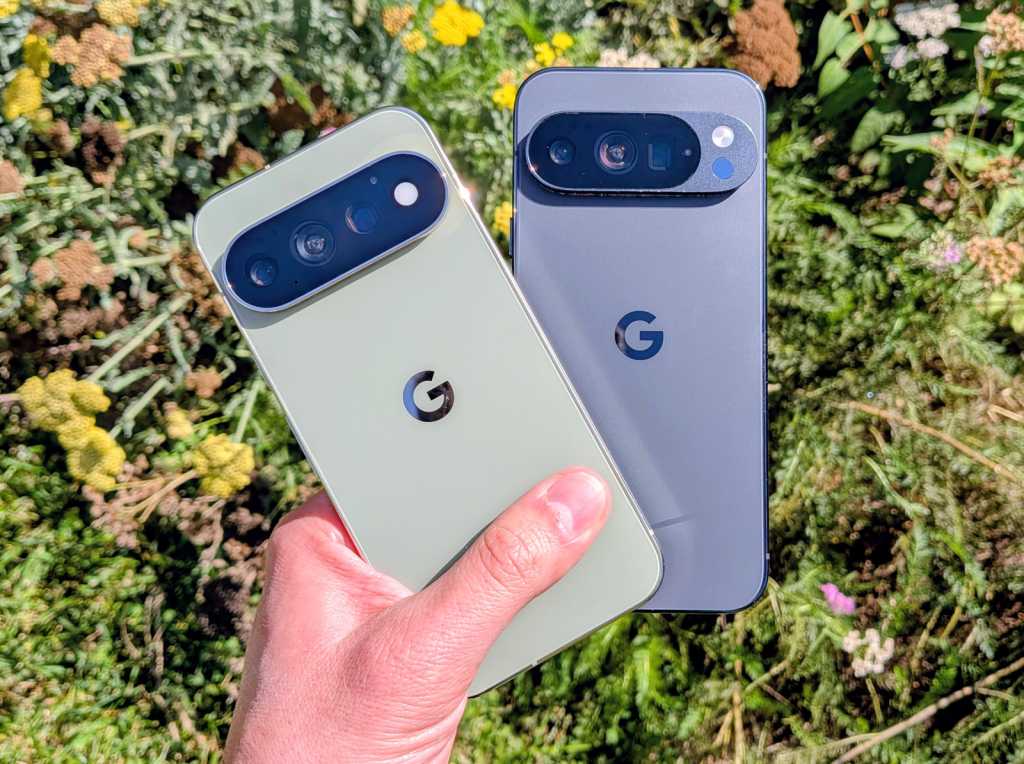
After a week of using Google’s new Pixel 11 phones, two seemingly at-odds realities are crystal clear in my mind: These are truly fantastic devices that build off the many successes of the previous-gen Pixel 10 models and push the products forward in some subtle-seeming but significant ways. Tech reviewers are gonna have an absolute field day with these things and tear ’em apart for being so similar to their predecessors — despite the fact that, by most measures, that probably won’t matter and is arguably on some levels even a good thing. Interestingly enough, these two realities manage to exist harmoniously — because they’re both very much accurate and very much true. The real question, then, becomes what all of that means for you as a productivity-minded, tech-dependent professional — and if these shiny new Pixels are advisable for you to think about buying. The answer, believe it or not, is actually quite simple. [Got a Pixel? Any Pixel? Check out my free Pixel Academy e-course to find all sorts of advanced intelligence lurking within your current phone!] Google Pixel 11 perspective First things first, let me tell you a little bit about my past week’s adventures. Last Wednesday — the same day Google awkwardly launched its latest-gen Pixel 11, Pixel 11 Pro, and Pixel 11 Pro Fold (gesundheit!) phones in an elaborate evening event several hours after an extensive blog-based announcement — I received a box of loaner review units for all those shiny new models. I’ve spent the past year or so living with my own personal Pixel 10 Pro, and I’ve personally owned and used almost all of the flagship-caliber Pixels (in one form or another) before that. Even with the iterations I haven’t personally owned, like last year’s Pixel 10 Pro Fold, I’ve spent plenty of time toting ’em around and getting to know ’em — and I’ve taken detours to explore most flagship-level Android gadget releases from other manufacturers along the way as well. The Pixel 11 Pro in its Olive color atop my personal Pixel 10 Pro in Obsidian.JR Raphael, Foundry So when I moved myself into these latest Pixels and started carrying ’em in place of my now-standard 10 Pro device, I have all the perspective in the world to tell you that: These devices are all positively delightful to use. They’re beautifully designed, sleek as can be, and a joy to carry and rely on. That’s in part due to the hardware, which has gotten impressively polished (and also just plain purty) over the years, but it’s more because of the software and the uniquely pristine and bloat-free approach Google takes to its Android operating system. It’s a night-and-day contrast to the experience you see from Samsung and other Android device-makers, and the impact is extremely noticeable both in what the phones are like to use and in the lack of in-your-face ads and legitimate privacy worries that other Android approaches unfortunately include. They’re also advantageous as a result of the genuinely useful and thoughtful touches Google adds into its native Android apps — like all of the smart Pixel Phone app features that let you avoid annoying hold times, skip over maddening phone mazes, intelligently screen calls and dodge spammy and scammy interruptions, and even enjoy clearer audio quality from regular ol’ audio conversations. And that’s to say nothing, of course, of the Pixel’s unmatched software support policy. The Pixel is the only Android device where timely and reliable software updates — both major Android releases and the many smaller rollouts that now accompany those throughout the year — are an unambiguous part of the core product promise. With any Pixel phone, you’ll receive every software update within days of its release. No other device-maker even comes close to matching that guarantee, and for anyone who cares at all about maintaining optimal privacy and security practices on your phone over time, that’s a distinction you simply can’t ignore. So that’s the first part of the Pixel 11 paradox — and that’s why these latest Pixels are all incredibly easy to recommend as the best all-around Android experiences available today and the only sensible suggestions for a top-tier Android purchase in 2026. But there’s another half of the story, and it’s equally important. The Pixel 11 upgrade uncertainty Plain and simple, the most striking thing about these latest Pixels is how similar they are to their previous-gen Pixel 10 equivalents. Now, don’t get me wrong: On paper, these latest Pixels are packin’ plenty of pertinent improvements. They’ve got new extra-efficient processors, brighter and supposedly more scratch-resistant displays, faster charging speeds, some new and improved camera components, and a thinner camera bar on the back. The Fold model is also ever-so-slightly thinner and lighter than its predecessor, by 0.7mm when folded (0.02″ — roughly half the thickness of a US dime) and 19g (roughly two-thirds of an ounce — the equivalent weight of three #2 pencils). Speaking of the Fold, the 11 Pro Fold model is a true treat to use, and I still love its more familiar-phone-like form compared to the shorter and squatter, square-ish shape Samsung is now adopting ahead of Apple’s expected move in that same direction. The Pixel Fold’s dimensions allow you to feel like you’re using a regular phone most of the time, without much compromise or awkwardly limited screen space, and then enjoy that glorious tablet-like screen on the inside whenever you feel like unfolding it. The Pixel 11 Pro Fold in my hand, with the 10 Pro Fold behind it.JR Raphael, Foundry Again: All of this works. Across the board, the Pixel 11 phones couldn’t possibly be pleasant to hold, carry, and use. They’re fast, their photos are second to none, and they sport a couple of truly interesting new software features that you might actually appreciate — like a new Magic Capture camera mode that lets you tap one button to record a video and automatically get full-resolution photos of the most meaningful moments from within it and an enhanced Android voice typing system that works like Wispr Flow and makes dictation easier and more accurate than ever. There’s also a new HiLight LED system on the Pro models’ backs that’s intriguing in theory but almost shockingly limited in implementation. Quite literally, all it does at the moment is light up when you’re talking to Gemini hands-free and light up with a custom color when one of your favorite contacts is calling. The Pixel 11 Pro’s HiLight LED, visible here at the right side of the camera bar, lights up for Gemini — and not much more.JR Raphael, Foundry It’s a great idea and return to the simple effectiveness of notification lights from Android’s past, but it’s embarrassingly half-baked in its execution. You can set up something similar but much less limited and more useful with a few minutes of crafty configuring on any Android device. Oh, and these latest Pixels also pack a handful of new whizbang AI additions that you probably won’t notice or ever do much with. So as you can see, in and of themselves and in the big picture, the Pixel 11 phones all stand out and are exceptional. But when you start looking at them compared to last year’s models or even the Pixel 9 devices before that — well, things get a little more complicated. In a week of using the different Pixel 11 phones, I couldn’t immediately detect or appreciate the presence of any of the aforementioned year-to-year improvements compared to the experience of using last year’s Pixel 10 models. The camera performance is still incredible, but looking at photos taken with the Pixel 11 Pro and Pixel 10 Pro (or any other 11-to-10 Pixel-to-Pixel comparison), the actual visible differences are subtle enough (and the previous model’s photos strong enough) that I suspect few people will spend much time thinking about them. As far as the processor goes, the phones feel zippy and as fast as can be right now, for sure — but, once more, I’d struggle to say they’re noticeably any faster, in real-world terms, than the models that came before them. And as far as the Fold is concerned, the form differences from last year’s device are so subtle that I think most people will be hard-pressed to be aware of the evolution. The same photo taken seconds apart on the Pixel 11 Pro (left) and 10 Pro (right).JR Raphael, Foundry The Magic Capture mode is nice, meanwhile, but I’m not sure it’s a reason in and of itself for most folks to buy a new device if they’re already using a recent previous-gen Pixel — and it may well make its way to older Pixels eventually. The enhanced Android voice typing system might be a reason to upgrade — but (a) it’ll almost certainly come to the rest of the Android ecosystem before long, and (b) in the meantime, you can get almost the exact same experience in just a slightly less native-feeling and convenient way by installing Wispr Flow. That aside, we can’t overlook two downgrades in the Pixel 11, compared to the 10 models: First, the Pixel 11 eliminates the thermometer that’s been present on the past few Pixel Pro models — something that was originally launched before it was ready but that evolved into a genuinely useful element. I can’t even count the number of times my wife or I have relied on it for taking a quick temperature when someone’s under the weather and a standalone thermometer can’t be found or is acting up and giving us a different reading every time we try it. Second, and perhaps even more significant, the Pixel 11 Pro models start with 12GB of RAM and only bump back up to 16GB — the standard level of memory for all Pro models last year — if you opt for the pricier 512GB storage version. The reason for this change is seemingly an industry-wide issue that’s out of Google’s control, of course, but it’s still something you’re faced with as a potential purchaser of these products. (I’d be surprised if anyone detected an immediate discernible difference in experience as a result of this change, but it stands to reason that the limitation could adversely affect you at some point down the line — particularly if you’re doing a lot of multitasking or other resource-intensive work.) The Pixel 11 Pro Fold, meanwhile, maintains its 16GB RAM level but includes a $100 price hike from last year’s version. So while the Pixel 11 phones are great phones in and of themselves, they aren’t exactly great upgrades if you’ve already got a Pixel 10 or arguably even a Pixel 9 equivalent in your person-paw. And because of that, most reviewers are gonna look at ’em and say, “Meh. These aren’t exciting.” Here’s a little secret, though: Particularly for professionals, “exciting” isn’t everything. An exceptional all-around experience and the knowledge that your device will remain optimally up-to-date as far as security, privacy, and performance are concerned — for a full seven years, with these products — means more. And in a weird way, having these phones not feel like must-buy upgrades over the past couple models is actually an indication that those previous years’ products are doing their jobs well. If you’re on an older-gen Pixel or thinking about making the leap to the land of Pixels for the first time, you can’t go wrong with any of Google’s new Pixel 11 options. They may not be exciting, exactly, compared to what came before ’em — but in an era where almost everything new is all about AI gimmicks for the sake of AI (and often at the expense of accuracy and quality), avoiding excitement and sticking to a setup that simply works well might be the smartest move you can make. Don’t let yourself miss an ounce of Pixel magic. Sign up for my free Pixel Academy e-course and discover tons of hidden features and time-saving tricks for whatever Pixel you’re using right now!
This is a summary aggregated from Computerworld. Read the complete article on the original site:
Read full article at Computerworld