Vibe Coding on a $20 Plan: Where the Money Actually Goes

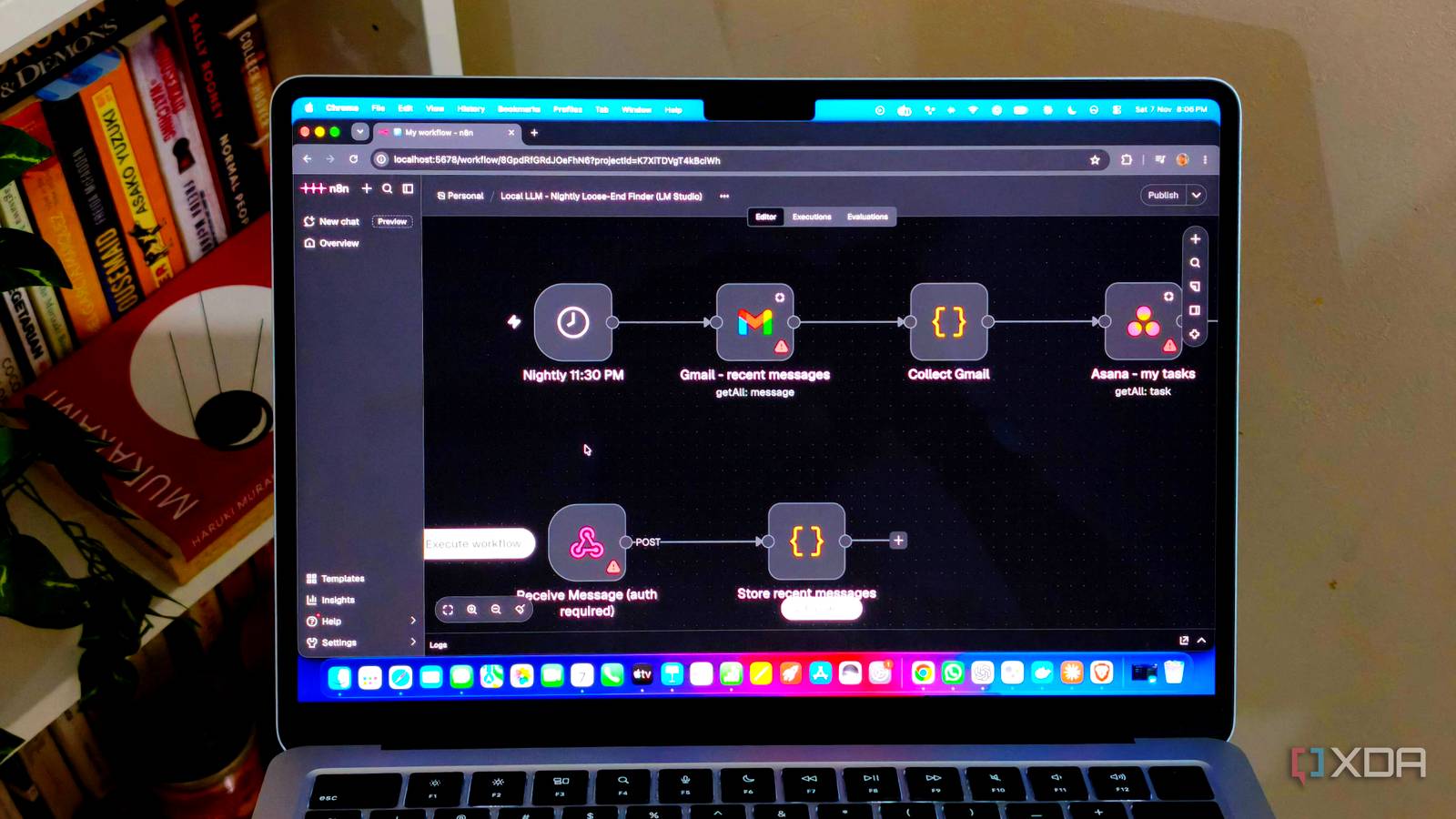
For a while I thought the cheapest way to write code with AI was a $20 subscription and a chat window. I would paste code in, copy the answer back, paste the error, and repeat. None of it felt expensive, because every step looked cheap. The real cost sat in steps I never bothered to count. Once I started counting, the picture changed. Here is what I found, and why I now think the harness matters more than the price tag. 1. Chat makes you the courier A chat model takes text and returns text. Every change to a file passes through me. I carry the code, the errors, and the context from one message to the next. The model never sees my project. It sees only what I remember to paste. An agent changes that. The model decides the next step, and a program around it, the harness, gives it files, a terminal, and tests. The model runs the tests and fixes its own errors. I review the result instead of every line. Chat needs a human at every step. In the agent loop, the harness returns tool output to the model. Most developers have made this switch. JetBrains' 2026 Developer Ecosystem Survey covered more than 15,000 professional developers. Of those, 90% use AI coding agents at work at least weekly, and 68% use them every day. The JetBrains chart shows which tools people reach for. Claude Code went from 3% in spring 2025 to 39% in May–July 2026. GitHub Copilot went the other way, from 29% to 21%. JetBrains, "Use at work", Developer Ecosystem Survey 2026. Latest wave n = 15,509. 2. What one task actually costs I wanted a number for a single task, not for a month, so I looked at Artificial Analysis. They ran the same kind of coding work through several agents and published what each run cost. One Claude Code run with Opus 5.5 is a good example. It took 146 turns and about an hour. It moved 14.5 million tokens, and 95% of its cache lookups hit. At API prices it cost $11.42. Four numbers from that run matter to me more than the total: 146 turns. Each turn is a full request, so one task becomes a long conversation. About one hour. Agent time is part of the cost, even when no money moves. 14.5 million tokens. Most of them are not new code. They are context the model reads again on every turn. 95% cache hits. Nearly every request reuses context that was already processed. The $11.42 is an API price. A subscription doesn't bill per task, so I treat the number as a yardstick: it shows how far a $20 plan would go if you ran this kind of work every day. 3. The harness changed my results more than I expected This is the part I did not expect. When I compare agent runs, the harness shows up in the results more than I thought it would. By harness I mean everything around the model: the skills it can load, the MCP servers that connect it to outside tools, the CLAUDE.md file with project rules, subagents with their own context, slash commands like /compact, and the permission settings. Good harness work makes each of the model's steps smaller and better aimed. In my own work, Claude Code has been the strongest harness I've used, and it has given me the best results. [ADD: one concrete task where a skill, an MCP server or CLAUDE.md changed the outcome, with turns or time before and after.] I have to be careful here. The Artificial Analysis comparison pairs whole setups: Claude Code with Opus 5.5 against Codex with GPT-6 Astra. The gap mixes the harness and the model, so that data alone cannot separate them. My view that the harness matters comes from what I see in use, not from a clean test. A clean test would keep the model fixed and change only the harness. 4. Why long chats get expensive Every turn, the agent sends the whole conversation back to the model: the chat history, every file it opened, and the output of every command it ran. Providers can cache the repeated part, which is why long sessions are affordable at all. Anthropic's pricing on the cache is the key detail. Writing a prefix to the cache costs 1.25 times the base input price. Reading it back costs about a tenth of that. A hit is far cheaper than a fresh read, but it still happens on every request. The longer the session, the more history gets re-read on each turn. Illustrative curve, not measured data. It shows how cost per request grows with the length of one chat. These are the habits I use to keep that curve flatter: I clear the context when the next task is unrelated. Old history is a cost I don't need to pay again. I use /compact when I must keep context, rather than carrying every old message forward. For bigger changes, I ask for a plan in a markdown file, clear the chat, and implement from the file. The model no longer re-reads the failed attempts. Research goes to a subagent when it reads many files, so the main session stays small. After two identical failures, I stop patching. A third patch on the same error usually makes the code worse. I roll back and rephrase. My CLAUDE.md is short. It holds only what the model cannot infer from the project itself. I commit before risky steps. The harness has its own undo, but git is the safety net I control. 5. Cheaper per task is not cheaper per solved task This is where I used to get the math wrong. A cheap model that fails often costs more than a strong model that finishes, because I pay for every failed attempt and for the time I spend cleaning up afterwards. Artificial Analysis, "Coding Agent Index vs. Cost per Task". Cost is the pay-per-token API price, on a log scale. In plain terms, the runs look like this: GPT-6.1 Sol in Codex: index 54, $1.50 per task, about 24 minutes, 3.9 million tokens. Haiku 5.5 in Claude Code: index 37, $2.67 per task, about 72 minutes, 16.1 million tokens. GPT-6 Astra in Codex: index 55, $7.04 per task, about 25 minutes, 3.2 million tokens. Opus 5.5 in Claude Code: index 62, $11.42 per task, about one hour, 14.5 million tokens. The index is a composite of three coding benchmarks. An eight-point gap, like Sol against Opus, is real but not huge. Opus leads GPT-6 Astra on all three sub-benchmarks, though only by a few points on each. This is how I choose now: Small, routine changes (a renamed variable, a new test, a copy edit): a cheap run is fine, and a failure costs little. Multi-file features and hard bugs: a stronger setup usually pays off, because one failed hour costs more than the difference in price. Haiku 5.5 is the one I would skip for real work. It costs more per task than GPT-6.1 Sol and scores 17 points lower. A pricing page never tells you any of this. What you pay for is finished tasks, and you only learn that by measuring your own. 6. Which plan fits Anthropic's consumer plans are Pro at $20 a month, Max 5x at $100, and Max 20x at $200. ChatGPT Pro also costs $200. Limits reset in rolling windows of about five hours, so a heavy afternoon can use up a plan that looks generous on paper. The method is simple. Work normally for one week and note how often you hit the limit. Then estimate what the same week would cost at API prices, using the token counts the tool reports. Pick the cheapest tier that stops you hitting the limit on a normal day. Moving up one tier usually costs less than paying API prices for a heavy week. 7. Where your code goes Cheaper access usually means different rules for your data, and those matter more than the price. Free model gateways. OpenRouter allows 50 requests a day on free models until you buy at least $10 in credits, then 1,000 a day. In October 2026, nine of the 19 free models ran on hosts whose published policy says they may train on your prompts. Subscriptions in third-party tools. Anthropic's terms say Free, Pro and Max subscription tokens are for Claude Code and Claude.ai only. Enforcement became server-side in early 2026. OpenAI lets some third-party tools sign in with a ChatGPT subscription. My rule: I don't send anything to a free route that I wouldn't show a stranger. Read the current terms before you build a workflow on a subscription, because these terms have changed several times this year. Bottom line Vibe coding is not a panacea. An agent can get a prototype out fast, and the harness decides how far it gets. But judgment, verification and maintenance do not go away because a model writes the code. Someone still has to decide what the system should do, check that it does it, and live with it afterwards. For anything you have to maintain, I don't think vibe coding is a way to build. The price shows the same thing. It is not the subscription. It sits in re-reading context, in retries, and in the cleanup that follows a run that looked finished. Clear context between unrelated tasks, stop when an agent starts looping, compare cost per finished task rather than per token, and check your usage every week. Prices and limits change, so treat the figures here as a snapshot from November 2026.
This is a summary aggregated from Dev.to. Read the complete article on the original site:
Read full article at Dev.to