The Shift to cgroup v2 in Kubernetes: What You Need to Know
In Linux, cgroups (control groups) are a kernel feature used for managing system resources. Kubernetes uses cgroups to allocate resources like CPU and memory...

⭐ Favourites
Updated 1 min ago · 10 articles from Kubernetes Blog
In Linux, cgroups (control groups) are a kernel feature used for managing system resources. Kubernetes uses cgroups to allocate resources like CPU and memory...
Memory QoS has graduated to Beta in Kubernetes v1.37 and is now enabled by default. On Linux nodes running cgroup v2, the feature uses the memory controller ...

I'm excited to announce that native histogram support for Kubernetes metrics is graduating to Beta and is enabled by default in Kubernetes v1.37! Native hist...
I am excited to announce that etcd RangeStream is graduating to beta in Kubernetes v1.37. Paired with etcd v3.7, it reduces the memory the API server and etc...

Editors: Arsh Sharma, Christopher Tineo, Kirti Goyal, Sophia Ugochukwu, Swathi Rao, Troy Connor Similar to previous releases, the release of Kubernetes v1.37...
As we get closer to the release date for Kubernetes v1.37, the project develops and matures, features may be deprecated, removed, or replaced with better one...
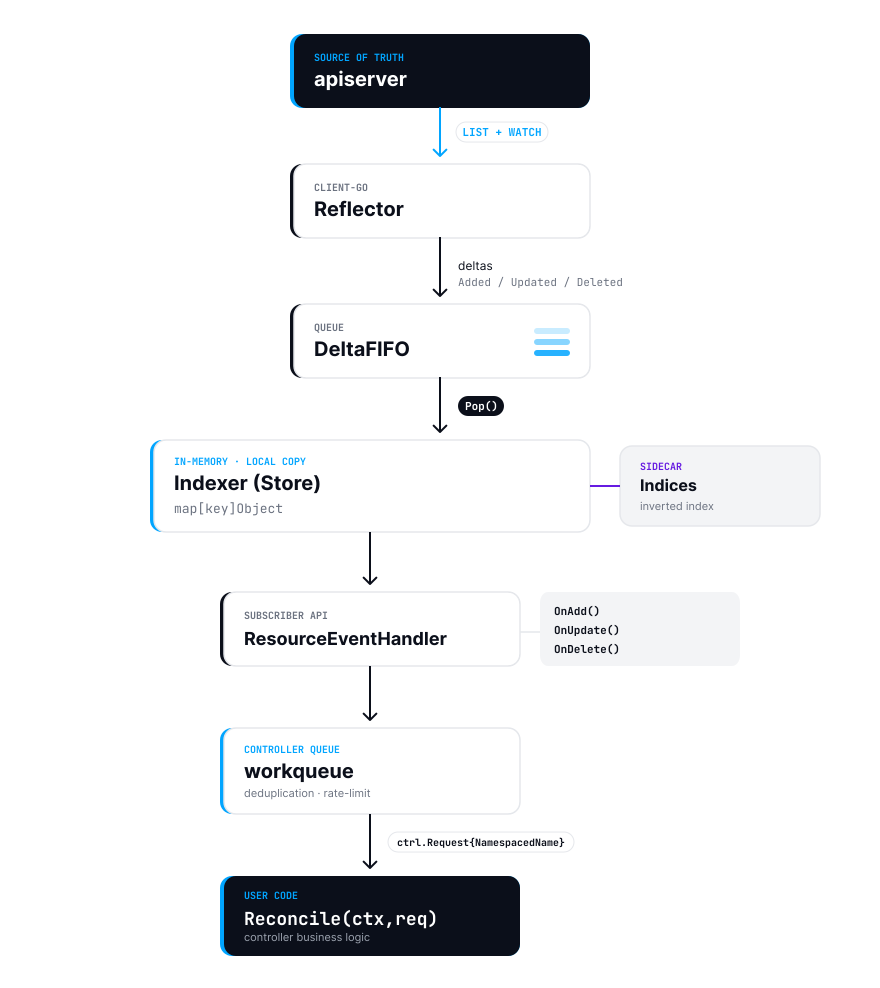
This article has been revised since it was first published, to correct several significant technical inaccuracies in the original text. Kubernetes has long b...
Kubernetes ships with built-in awareness of CPU and memory, but most real-world scaling decisions depend on signals that live entirely outside that narrow wi...
This article is a mirror of the original announcement Today, SIG etcd is releasing etcd v3.7.0, the latest minor release of the popular distributed key-value...
If you've ever tried to enforce a security policy across a fleet of Kubernetes clusters, you've probably run into a frustrating chicken-and-egg problem. Your...